


South Africa Moves to Block Illegal Online Gambling Websites
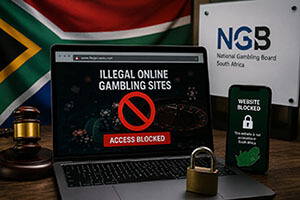
South African authorities are preparing to take stronger action against online gambling sites that operate without a local licence.
The National Gambling Board has started looking for a technical partner that can identify, monitor and potentially block unlicensed gambling websites targeting South African players. The proposed system would also track operators that return under new domain names after an earlier website has been blocked.
No nationwide blocking system is active yet. However, the latest plans show that regulators are moving beyond warnings and are now considering practical ways to make unlicensed gambling sites harder to access.
A system for monitoring and blocking gambling sites
The National Gambling Board published an Expression of Interest on 30 June 2026. It invited technology providers to explain how they could help detect and block illegal online gambling websites.
The proposed service would monitor websites that accept South African players and gather information about the businesses behind them. This could include the operator’s ownership, licensing details, location and the domains it uses.
Sites found to be operating without the required South African licence could then be added to a blocking system. Information collected about these businesses may also be shared with law enforcement agencies.
One important part of the proposal is continuous monitoring. Blocking one web address is unlikely to stop an offshore operator for long. A casino can register a similar domain, move its website or direct players towards an alternative version of the same platform.
The system would therefore need to recognise when a previously identified operator returns under a different address.
In our view, this will be essential if the project is going to have a real effect. A blocklist that is only updated occasionally would quickly fall behind.
Blocking has not started yet
South Africans should not expect gambling sites to suddenly become unavailable in the coming days.
The National Gambling Board is currently gathering information from possible suppliers. Interested companies have until 7 August 2026 to submit their proposals. The regulator may use those submissions to prepare a formal tender at a later stage.
That means there are still several steps to complete before an operational blocking system can be introduced.
Internet providers have also raised questions about how blocking should be handled. The Internet Service Providers’ Association of South Africa has said that any internet blocking system should operate under a clear legal framework, with proper oversight and transparency.
This could affect how quickly the plans move forward and who will have the authority to order a website block.
For now, the proposal should be seen as preparation rather than an immediate crackdown. Even so, it is one of the clearest indications yet that the government wants a more technical and coordinated response to unlicensed gambling sites.
Why regulators want stronger action
Unlicensed gambling sites can be difficult for South African authorities to supervise.
Many are operated from overseas but still actively target local players. They may accept deposits in rand, offer payment methods familiar to South Africans and advertise bonuses specifically aimed at the local market.
The main problem is that these sites operate outside the South African licensing system. Regulators cannot easily check whether they treat players fairly, protect deposits or process withdrawals correctly.
When something goes wrong, players may discover that there is no local regulator able to investigate their complaint.
Licensed operators, on the other hand, must follow the rules set by the relevant South African gambling authority. Their licence can be checked, and there is a local organisation responsible for supervising their activities.
The South African Bookmakers’ Association has welcomed stronger action against unlicensed offshore operators. It claims these businesses now account for a significant part of the country’s online gambling market.
The association has estimated that around 62% of online gambling activity takes place with illegal operators. This figure comes from the gambling industry and should not be treated as independently confirmed government data. Still, it shows why locally licensed businesses are supporting tougher enforcement.
What could this mean for players?
If the project moves forward, South Africans could find that some gambling websites are no longer accessible through their normal internet connection.
Operators may try to avoid blocks by launching replacement domains, mirror websites or separate mobile apps. Players could also receive messages directing them to a new web address.
A sudden domain change should be treated as a warning sign, especially when a site does not clearly display a South African licence.
Players should check an operator’s licence before making a deposit. The National Gambling Board’s verified operators portal provides a central place to check businesses that are licensed in South Africa.
A foreign gambling licence is not the same as a South African licence. A site may be licensed elsewhere while still operating without local approval.
A significant step, but not an instant solution
Website blocking will not remove every unlicensed gambling site from the market. Offshore operators can change domains quickly, use alternative payment methods and promote themselves through social media.
However, blocking could make these businesses less visible and more difficult for casual players to access.
The next major development will be whether the National Gambling Board moves from its current information-gathering process to a formal tender. Until then, no large-scale blocklist is in operation.
What is clear is that South African regulators are no longer relying only on public warnings. They are now exploring a system designed to actively identify, follow and restrict gambling sites that operate without a local licence.
This news article was published on 07-23-26

Adiela de Bruyn
Adiela founded the website and has over 17 years of experience in the gambling industry. She reviews all listed casinos and carefully checks licensing, safety, and legal requirements before anything is published.

Eugene Jacobs
Eugene is our compliance and audits expert with years of experience in the online gambling industry, carefully verifying licensing, regulatory standards, and fairness before every page is published.